
A new gas line is the job behind a gas range, a dryer, a tankless water heater, an outdoor kitchen, a fire pit, or a backup generator. This guide explains when a home needs one, how the installation works from permit to pressure test, and what drives the cost. Proverbs Plumbing installs gas lines for homes and businesses in Georgetown, TX and the surrounding Central Texas communities.
Installing a new gas line in a house means a licensed plumber sizes the pipe for the total appliance load, routes it, connects it, pulls a permit where the city requires one, and pressure tests every joint before gas flows. Proverbs Plumbing in Georgetown, TX handles this work for ranges, dryers, tankless water heaters, outdoor kitchens, and generators.
When Does a Home Need a New Gas Line?
A home needs a new gas line when you add a gas appliance where no gas connection exists, install equipment that needs more capacity than the current pipe can deliver, or replace piping that has corroded. The most common triggers are:
- Switching to gas appliances: converting an electric range or dryer to gas means running a line to a spot that has never had one.
- Upgrading to tankless: a tankless water heater can draw far more gas at once than a tank unit, so the existing supply line often needs to be upsized.
- Outdoor living: grills, outdoor kitchens, fire pits, and pool heaters usually need a buried line from the house.
- Backup power: a whole-home generator is a large gas load that has to be planned into the system.
- Aging pipe: corroded or damaged piping, or lines disturbed during a remodel, may need to be rerouted or replaced.
How Is a Gas Line Installed, Step by Step?
A gas line installation moves from load calculation to routing, connection, and testing, and gas is not turned on until the system passes. Here is the typical order of work:
- Step 1: Add up the load. Every appliance has a BTU rating. The plumber totals them to size the pipe, because undersized pipe starves appliances when several run at once.
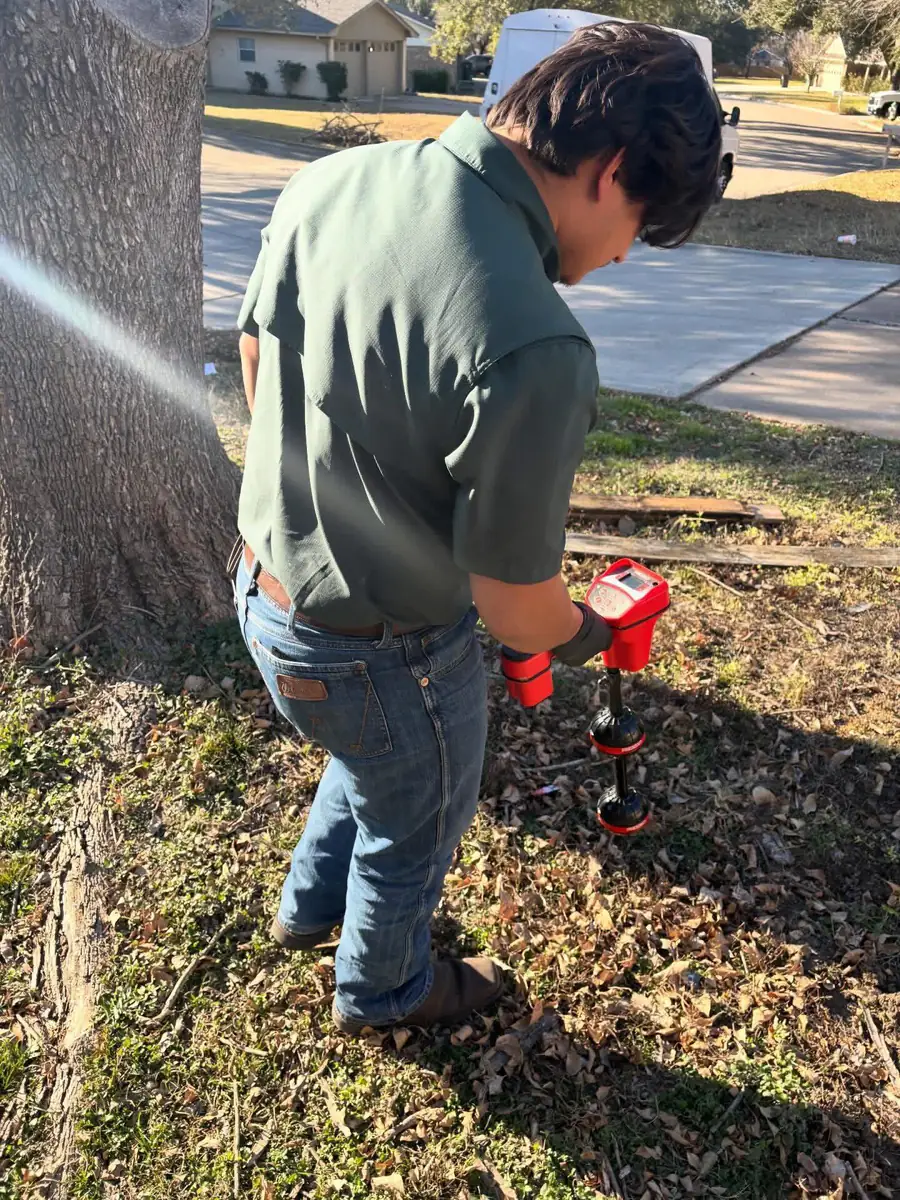
- Step 2: Plan the route. Indoor runs follow walls, attics, or crawl spaces. For outdoor runs, buried utilities must be located first, and in Texas that starts with a call to 811 before anyone digs.
- Step 3: Handle the permit. Permit requirements vary by city, and a licensed plumber takes care of the paperwork and schedules the inspection.
- Step 4: Run and connect the pipe. The plumber installs the line, adds shutoff valves at each appliance, and makes the final connections.
- Step 5: Pressure test. The system is pressurized and checked for any drop that would signal a leak before the gas supply is opened.
- Step 6: Inspect and start up. After the line passes, gas is turned on and each appliance connection is checked.
This is the same process described on our gas line installation and repair page, and it applies whether the job is one appliance or a whole system.
What Pipe Materials Are Used for Gas Lines?
The three materials you will hear about most are black iron pipe, corrugated stainless steel tubing, and yellow polyethylene pipe for underground runs. Each has a place, and the right choice depends on the route and the appliance:
- Black iron pipe: rigid steel pipe common for interior runs and larger loads.
- Corrugated stainless steel tubing (CSST): flexible tubing that is easier to route through tight spaces.
- Polyethylene pipe: yellow plastic pipe used for buried lines, which transitions to metal pipe where it comes above ground.
Your plumber chooses the material on site based on the route and local code, which is one more reason this is not a good do-it-yourself project.
What Affects the Cost of Installing a Gas Line?
The cost of a new gas line depends mainly on how long the run is, how hard it is to reach, and how much gas the appliances need. Every home is different, so a plumber has to see the site before giving a real number. These are the factors that move the price:
- Length of the run: a short hop from an existing line costs less than a long run across the property.
- Route and access: finished walls, slab foundations, and buried runs take more labor than an open attic or garage.
- Pipe size and material: larger loads need larger pipe, and the material affects labor and parts.
- Number of appliances: each additional appliance adds a connection and increases the load.
- Permit and inspection: requirements vary by city and are part of the job.
Proverbs Plumbing walks the route, explains the options, and gives a transparent estimate before any work starts.
Can You Install a Gas Line Yourself?
Gas work should be left to a licensed plumber, because a small mistake can cause a fire, an explosion, or a carbon monoxide hazard. Unpermitted work can also create problems with insurance and with selling your home later. If you ever smell gas, leave the house, avoid switches and flames, and call your gas company or 911 from outside. Our guide on whether a plumber can fix a gas leak covers the safety steps in detail.
Do Businesses Need Gas Line Installation Too?
Yes. Restaurants, commercial kitchens, and other facilities depend on properly sized gas lines for cooking and heating equipment, and the load is usually much larger than in a home. Proverbs Plumbing handles this through our commercial plumbing service and repair work, and our article on why gas lines fail in commercial kitchens explains what to watch for after installation.
Frequently Asked Questions
How long does it take to install a gas line?
It depends on the length and route of the run. A short indoor connection for one appliance is a much smaller job than a long buried line to an outdoor kitchen. Proverbs Plumbing gives you a clear timeline after seeing the site, so you know what to expect before work begins.
Do I need a permit to install a gas line?
Often yes, but permit requirements vary by city. When a job calls for a permit, Proverbs Plumbing coordinates it and the inspection so you do not have to.
Can a plumber install a gas line for a stove, dryer, or outdoor kitchen?
Yes. A licensed plumber can run new gas lines for ranges, dryers, outdoor kitchens, fire pits, generators, and other gas equipment. Proverbs Plumbing serves homes across Georgetown and the surrounding area.
Is my existing gas line big enough for a tankless water heater?
It depends on the total load. A plumber adds up the BTU ratings of every gas appliance and compares that to what the current pipe can deliver. If the pipe is too small, it can be upsized as part of the tankless installation.
What is the difference between gas line repair and gas line installation?
Repair fixes an existing line that is leaking or damaged, while installation adds new piping or replaces old piping. Both are handled by Proverbs Plumbing, and both end with a pressure test before the gas is turned back on.
Does Proverbs Plumbing install gas lines for commercial properties?
Yes. Proverbs Plumbing installs and repairs gas lines for both residential and commercial properties in Georgetown, TX and nearby cities.
A New Gas Line Starts With Proper Planning
A safe gas line installation comes down to correct sizing, the right pipe for the route, a permit where one is required, and a pressure test before the gas goes on. When those pieces are handled by a licensed plumber, the new line is safe and ready for years of service. Proverbs Plumbing does this work for homeowners and businesses across Georgetown, TX.
Schedule Gas Line Service with Proverbs Plumbing
Ready to add or upgrade a gas line? Call Proverbs Plumbing at (512) 240-4401 or email proverbsplumbing@gmail.com for an honest assessment and a transparent estimate. Our licensed team serves Georgetown, Round Rock, Cedar Park, Leander, Hutto, Pflugerville, and nearby Central Texas communities.
 Our Location
 Call Us
 Email Us